Making an archive worth talking about
A tablet-based archive game for the Tin Sheds Gallery. Foam board and sticky notes ended it in an afternoon. What replaced it was a card game.
Snapshot
- Team
- Five designers. No division of labour, research, concept, testing and iteration were done collectively.
- Client
- Tin Sheds Gallery, University of Sydney
The brief
The Tin Sheds Gallery has been a platform for artists and political activism since 1969. After merging into the Architecture, Design and Planning faculty, that community connection faded.
How might we use the TSG's housing archives to create genuine dialogue with youth, moving from passive display to active participation, and rebuild the gallery's role in the community?
Research surfaced three problems. Almost nobody we spoke to had heard of the TSG, often confusing it with a larger nearby gallery. The programming had narrowed toward architectural exhibits. And much of the gallery's own history was unrecorded and poorly managed.
We scoped to the housing archives and one question: how do you make an archive participatory rather than passive?
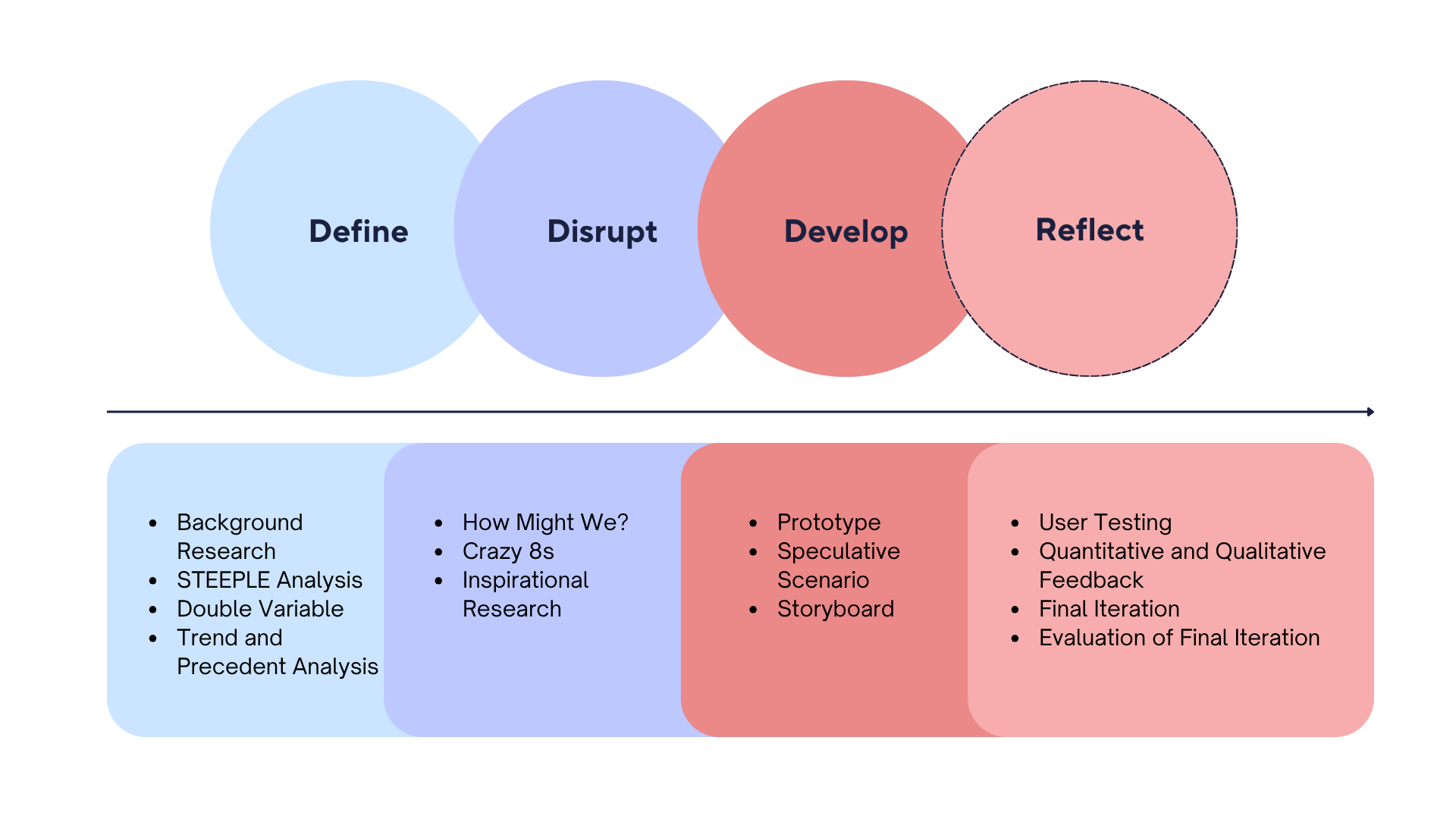
Our creative process, from research through to a tested prototype.
What we built first
The Roofs, three parts. A living wall of housing history updated by visitors. A tablet archive game. A workshop where students curated contributions back into the archive.
The tablet game had logins, colour-matched pairing over proximity sensors, year-by-year archive questions with two attempts each, and badges.
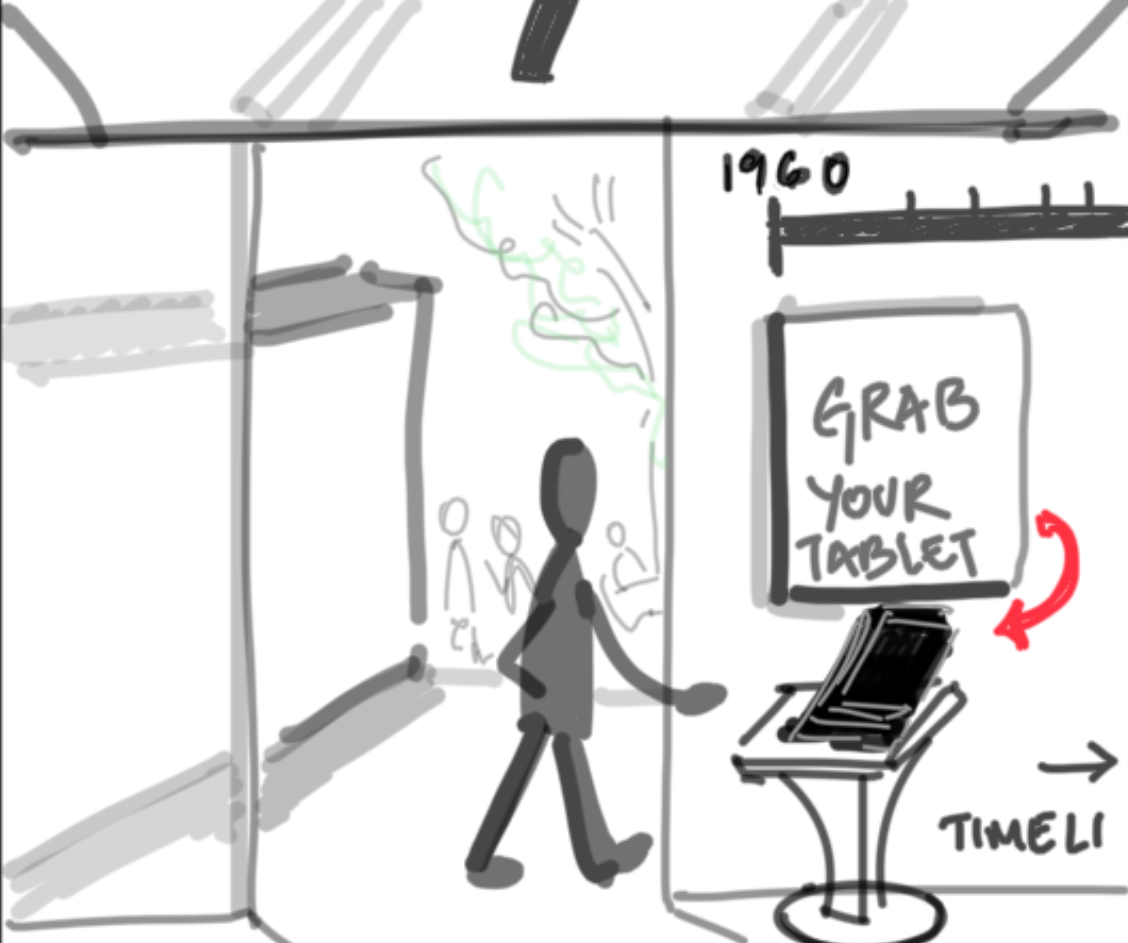
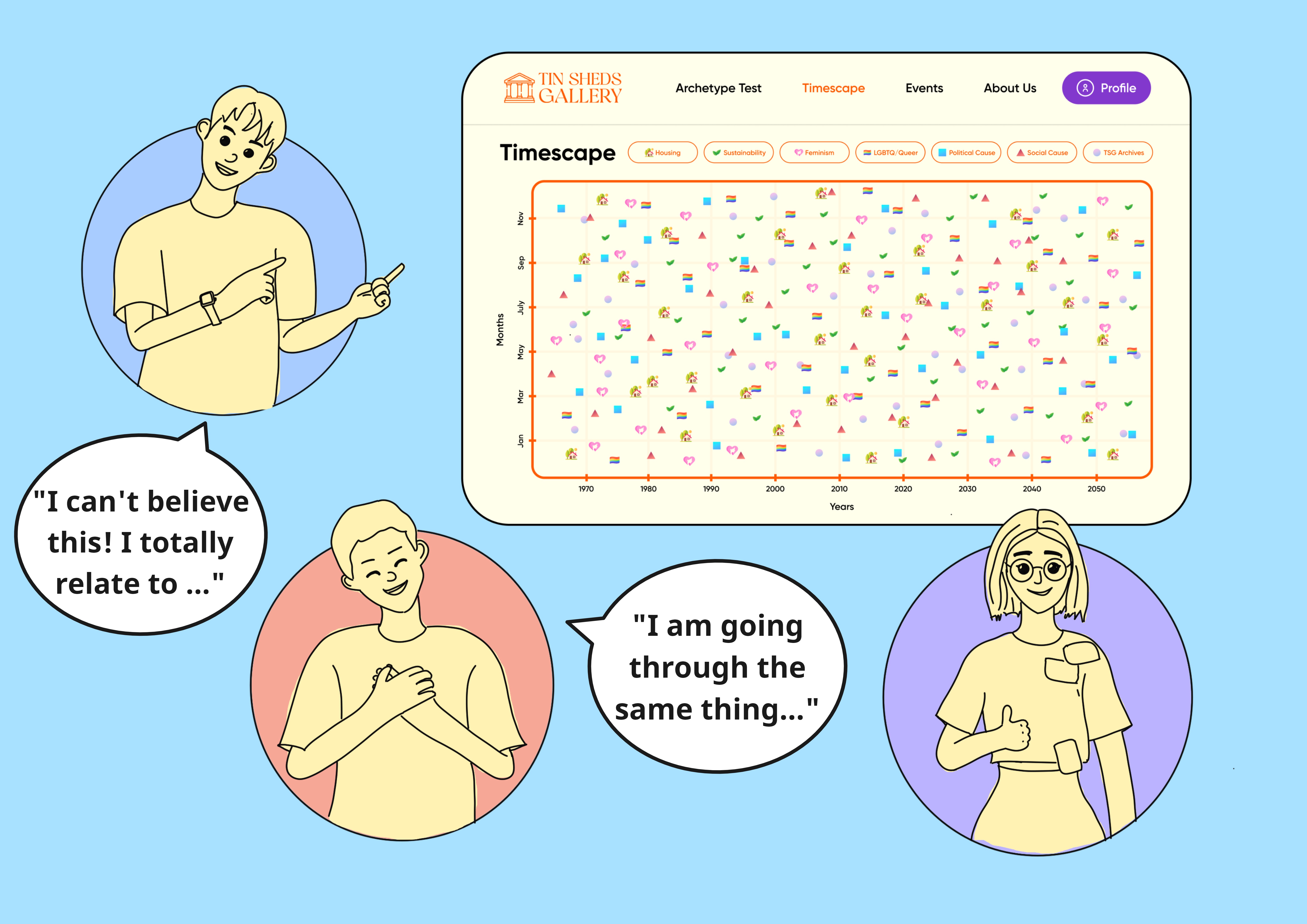
Participants enter the Tin Sheds Gallery and are directed to the podium with tablets. The TIMESCAPE is displayed on the walls of TSG.
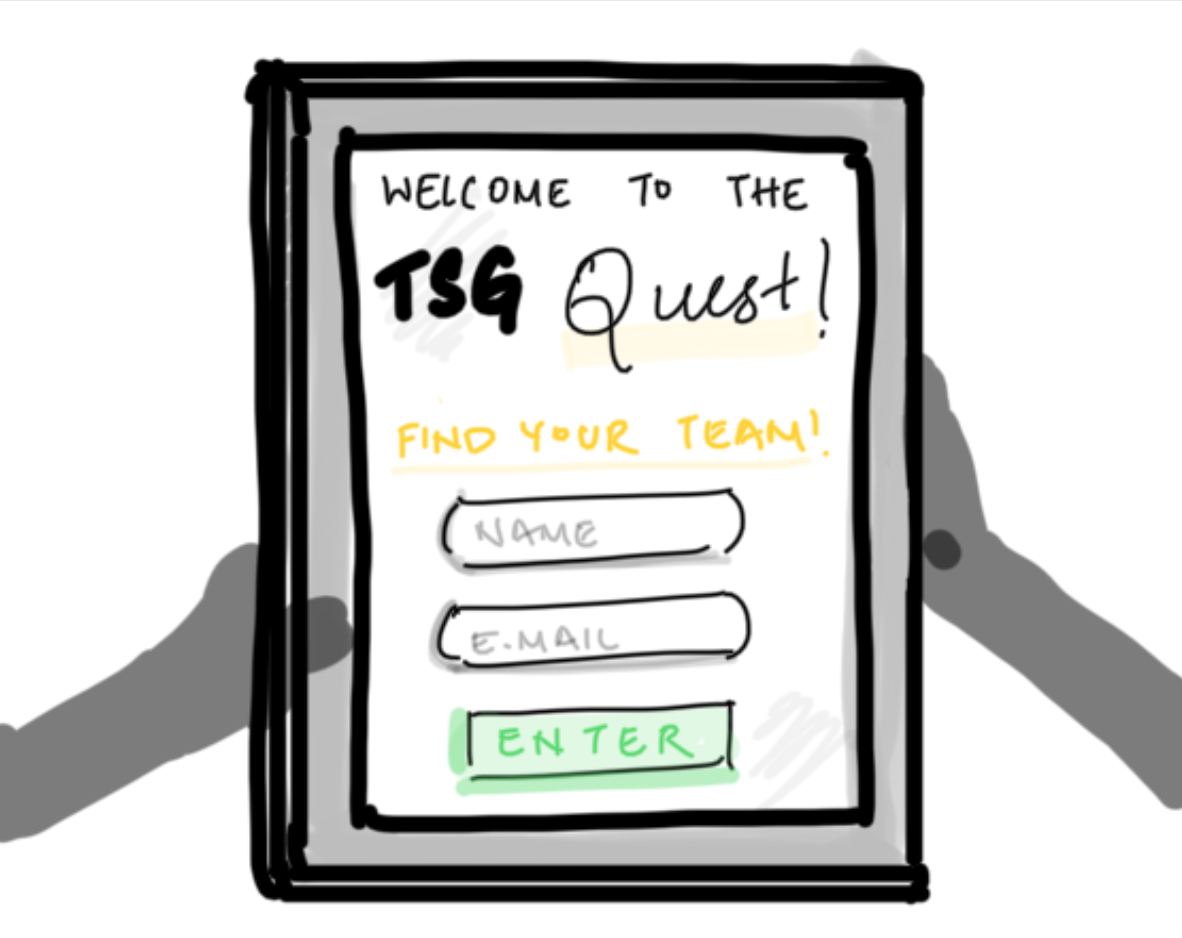
Participants log into the TSG Quest by providing their personal details.
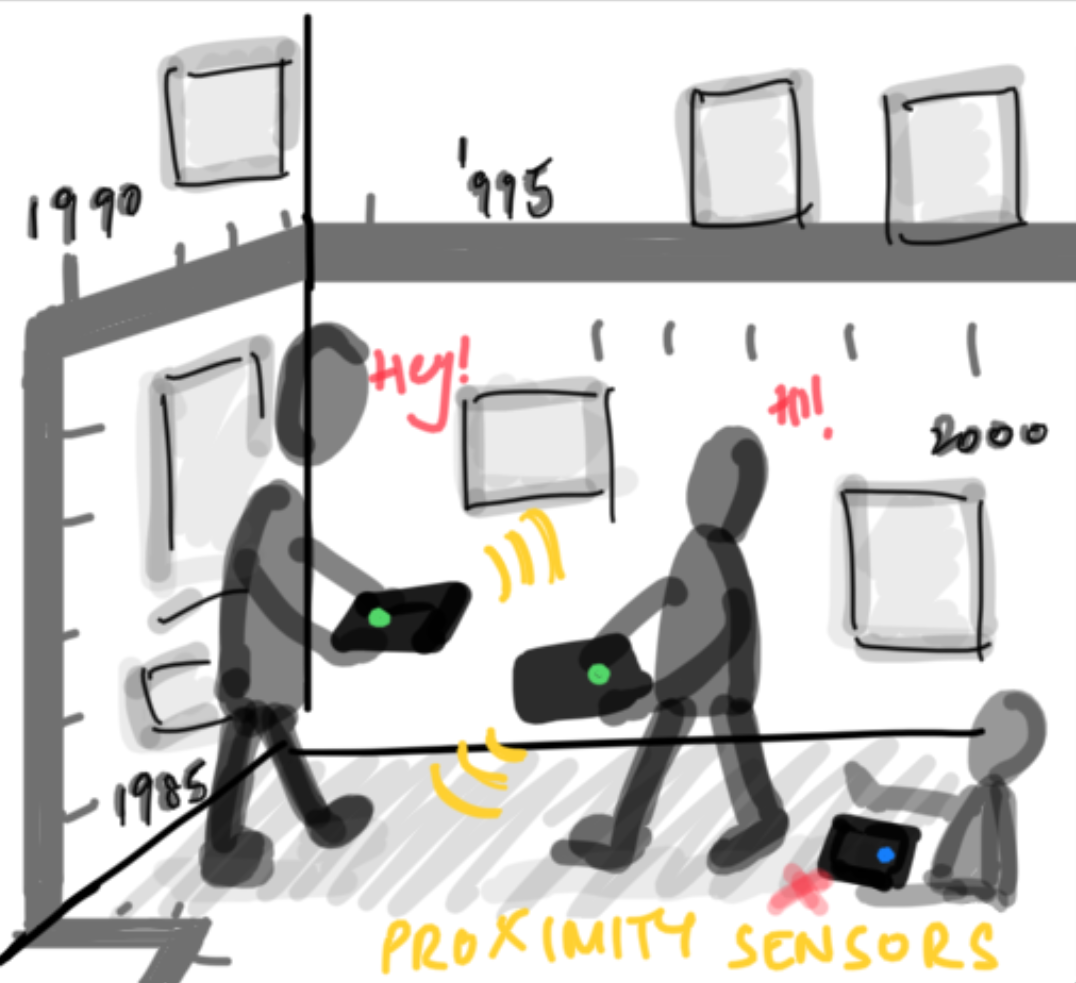
The quest requires participants to be in groups, and each participant has a colour flashed onto their screen to allow them to find their partner. Proximity sensors vibrate when they are near their pair.
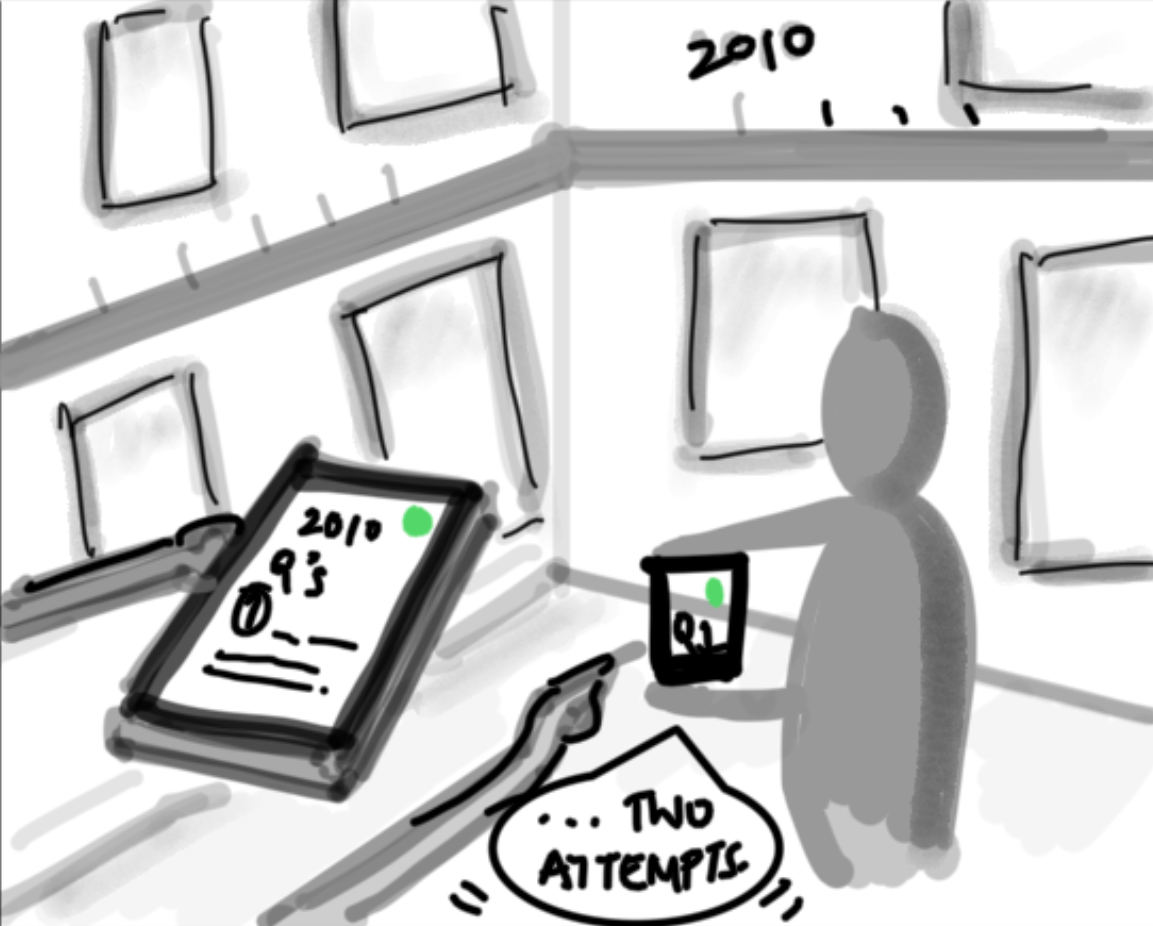
The tablet directs the group to a year on the timescape and gives them questions based on the archives of that year as part of the quest.
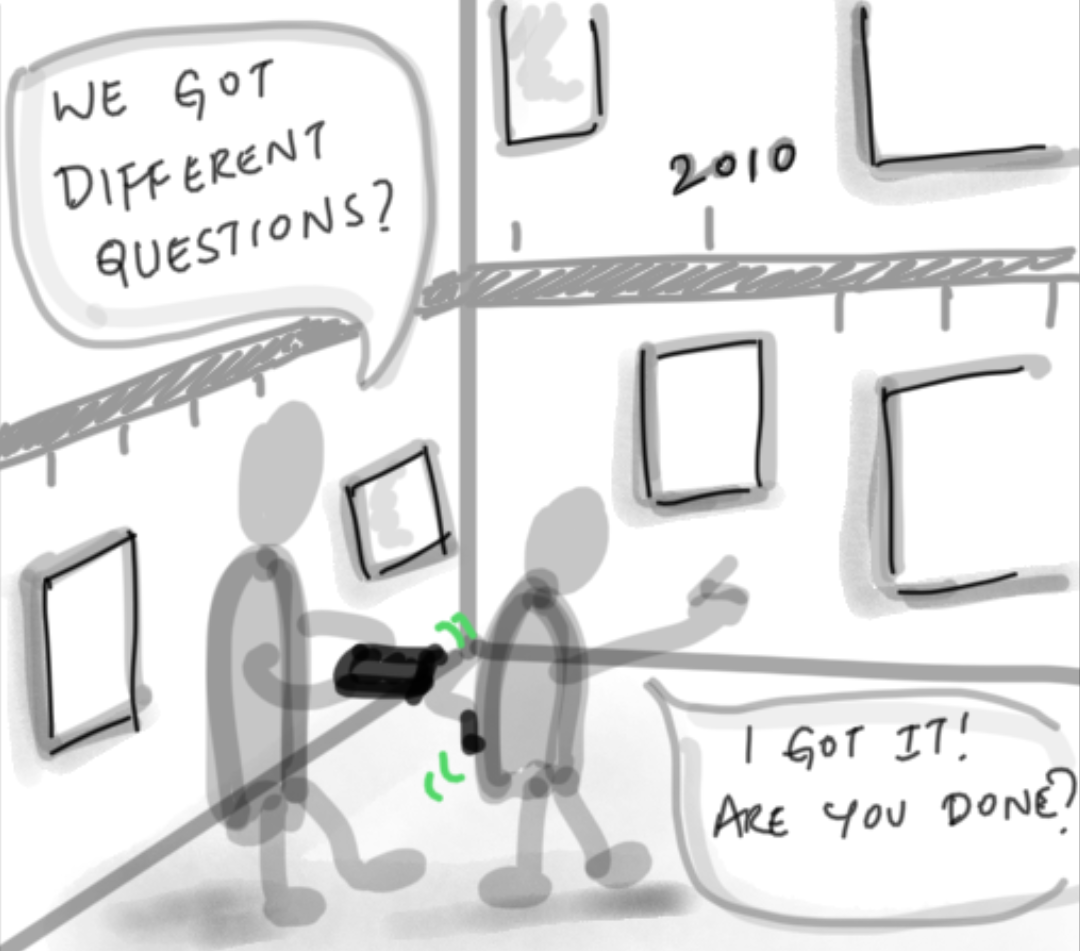
The questions are different per participant and are used as a method of interaction between the participant and the archive, as well as a learning tool.
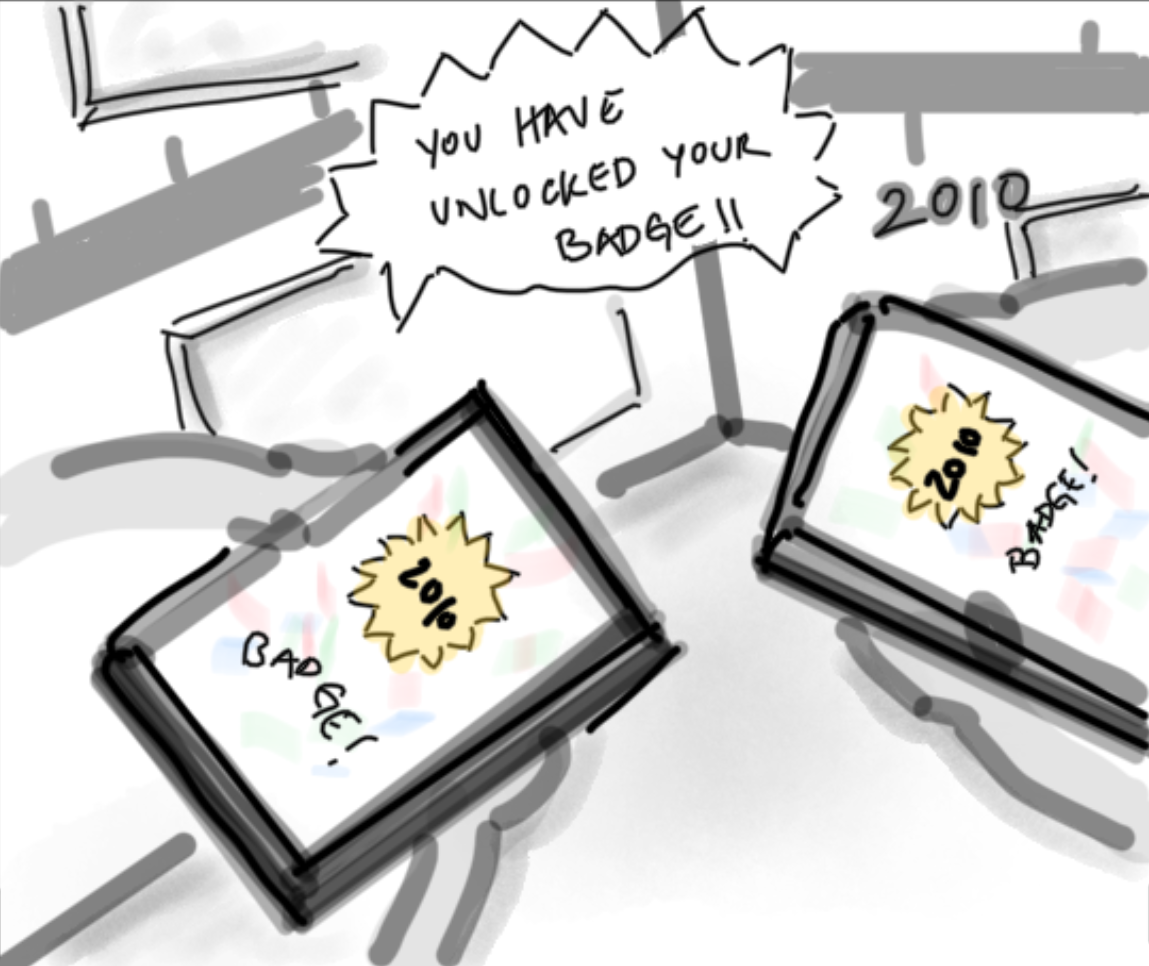
Participants have 2 attempts to provide correct answer for the question. After providing the correct answers, participants are given a badge for clearing that level.
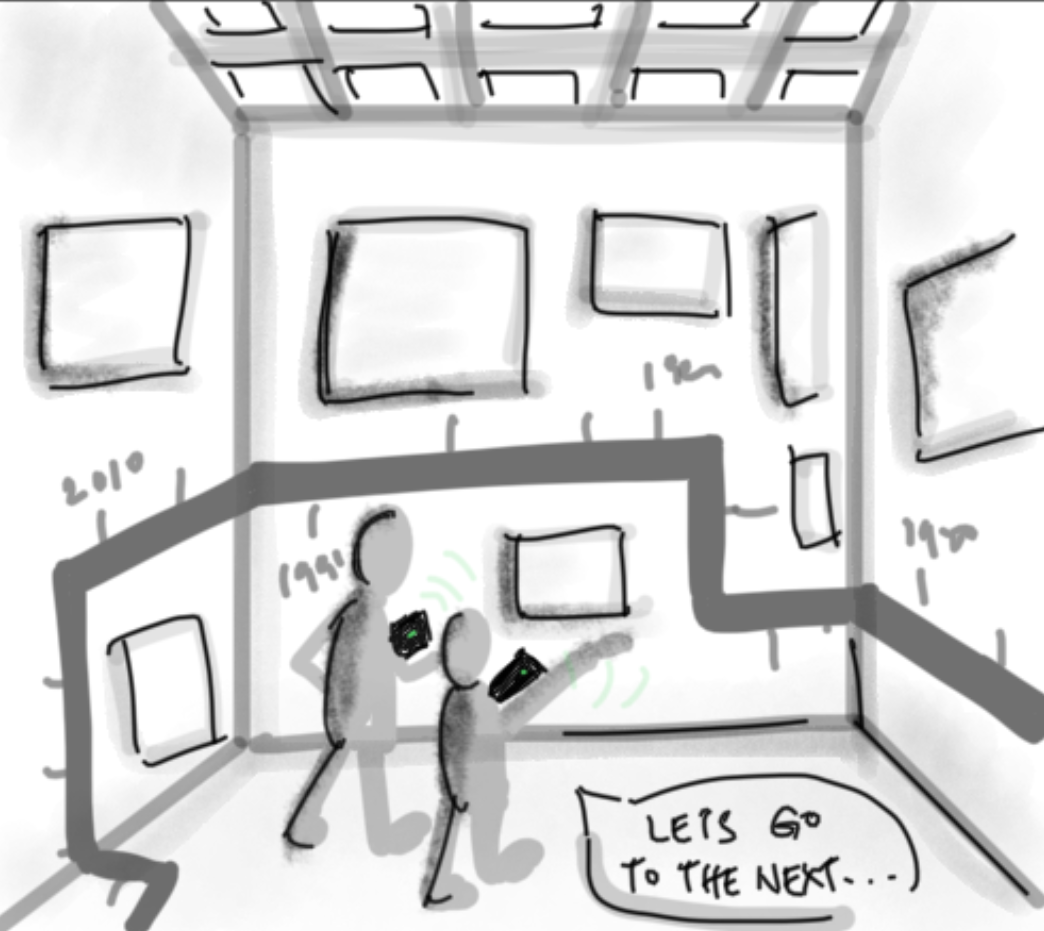
Participants are then led to another year and provided with more questions
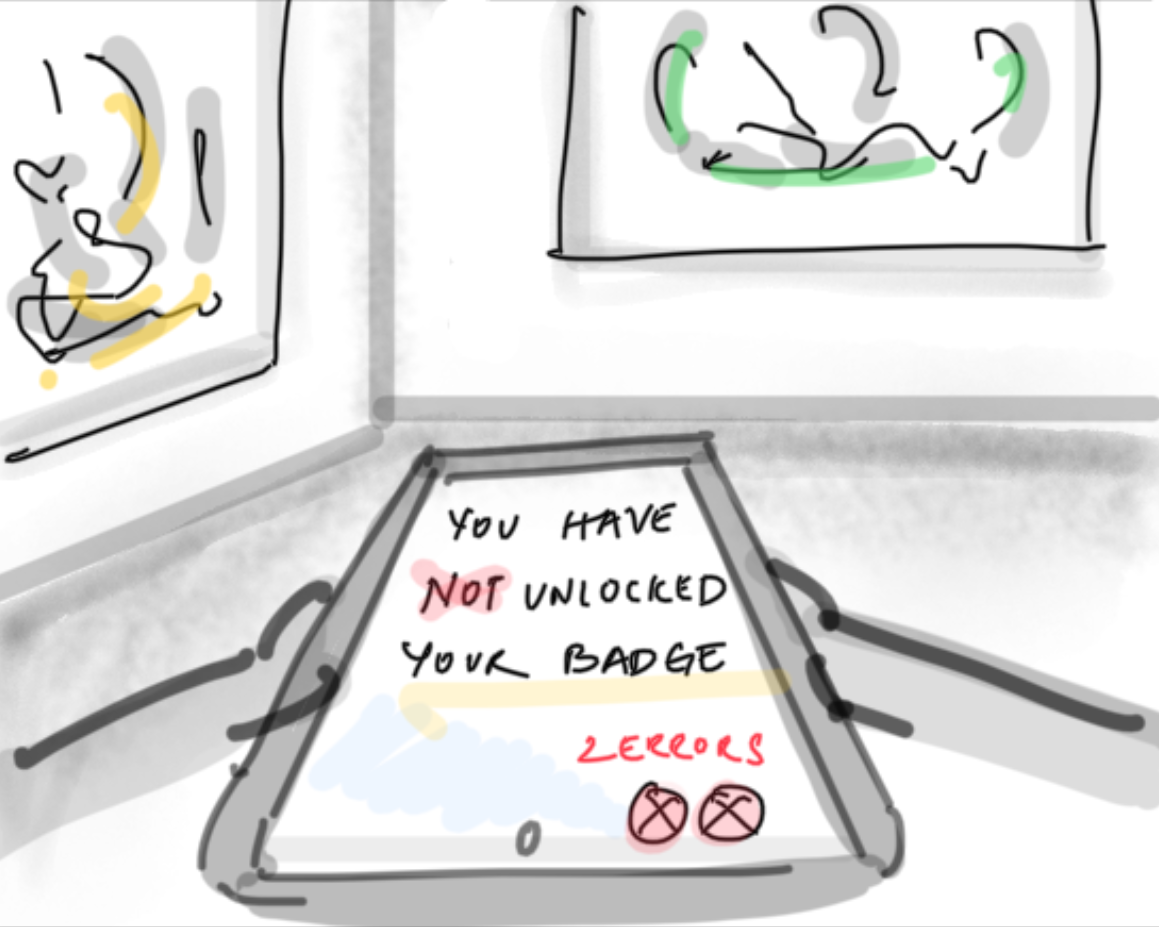
If one participant does not provide the correct answer in the two attempts provided, the team will not receive the badge for that year.
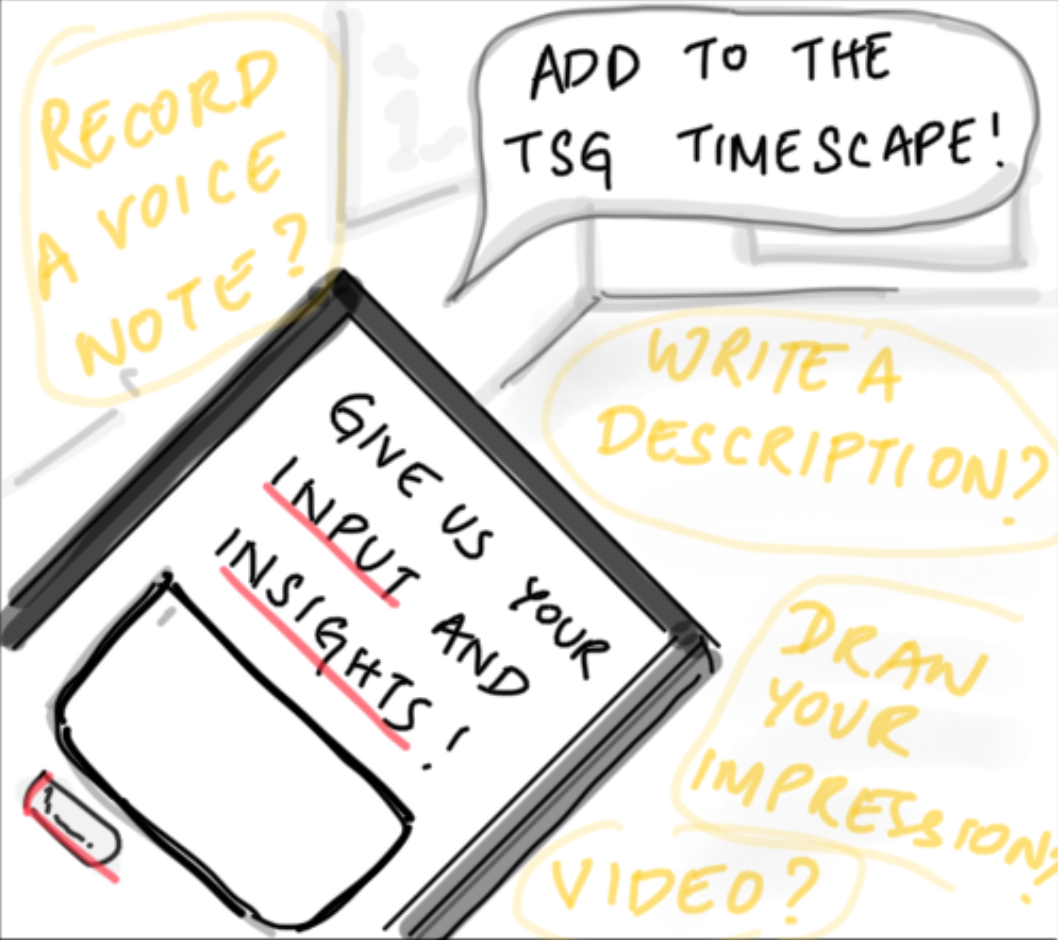
After completing the quest, the tablet prompts the participant to leave an insight to add to its records, in the form of a paragraph, sketch, voice.
The tablet archive game storyboarded in full, login, colour pairing, year-by-year questions, two attempts, badges. Every mechanic here measures whether someone absorbed the archive.
How it failed
We prototyped in foam board and sticky notes and tested with roughly 15 to 20 people. Three things came back:
- No connection, not to the archive, and not to each other
- Boring, the questions read as homework
- Nothing retained, neither the content nor the experience
The problem wasn't the tablet. Every mechanic we had built, scored questions, limited attempts, badges, measured whether someone had absorbed the archive. None of them gave anyone a reason to care about it.
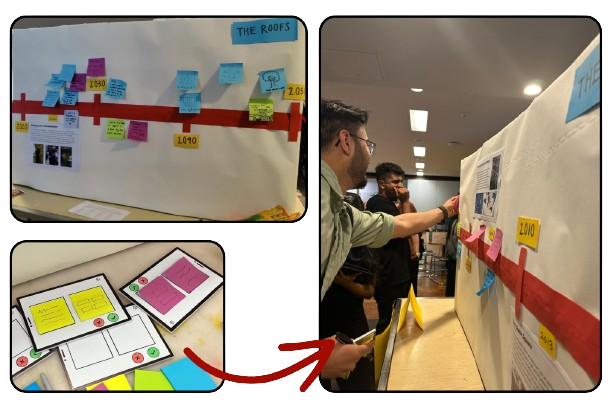
Foam board and sticky notes ended the tablet concept in an afternoon.
What replaced it
A physical card game for groups of six or more.
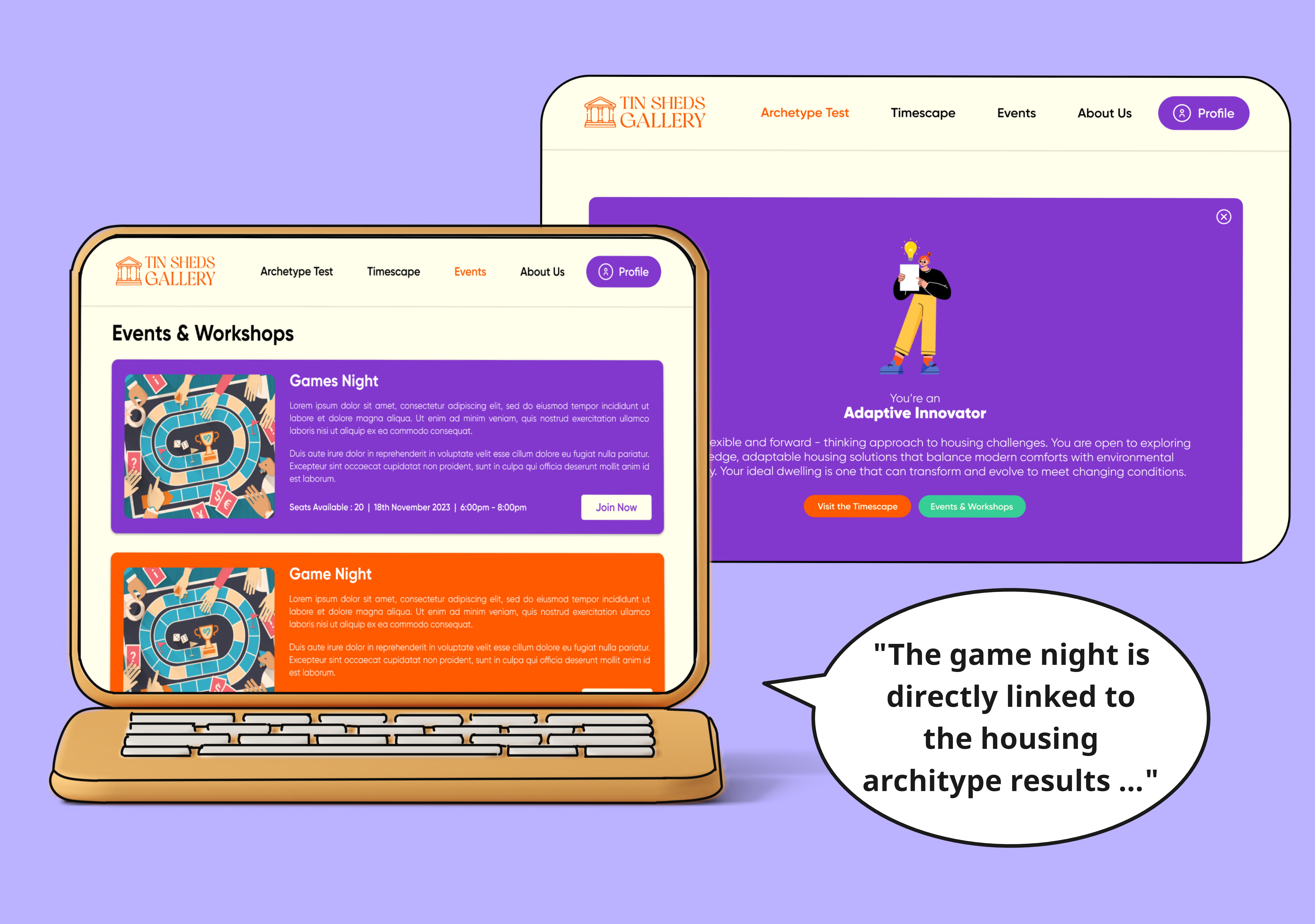
Players take a short quiz on the TSG website beforehand and are sorted into housing archetypes. Budget-Conscious Minimalist, Adaptive Innovator, Environmentally Friendly Nomad, so they arrive with a personal lens rather than a blank one.
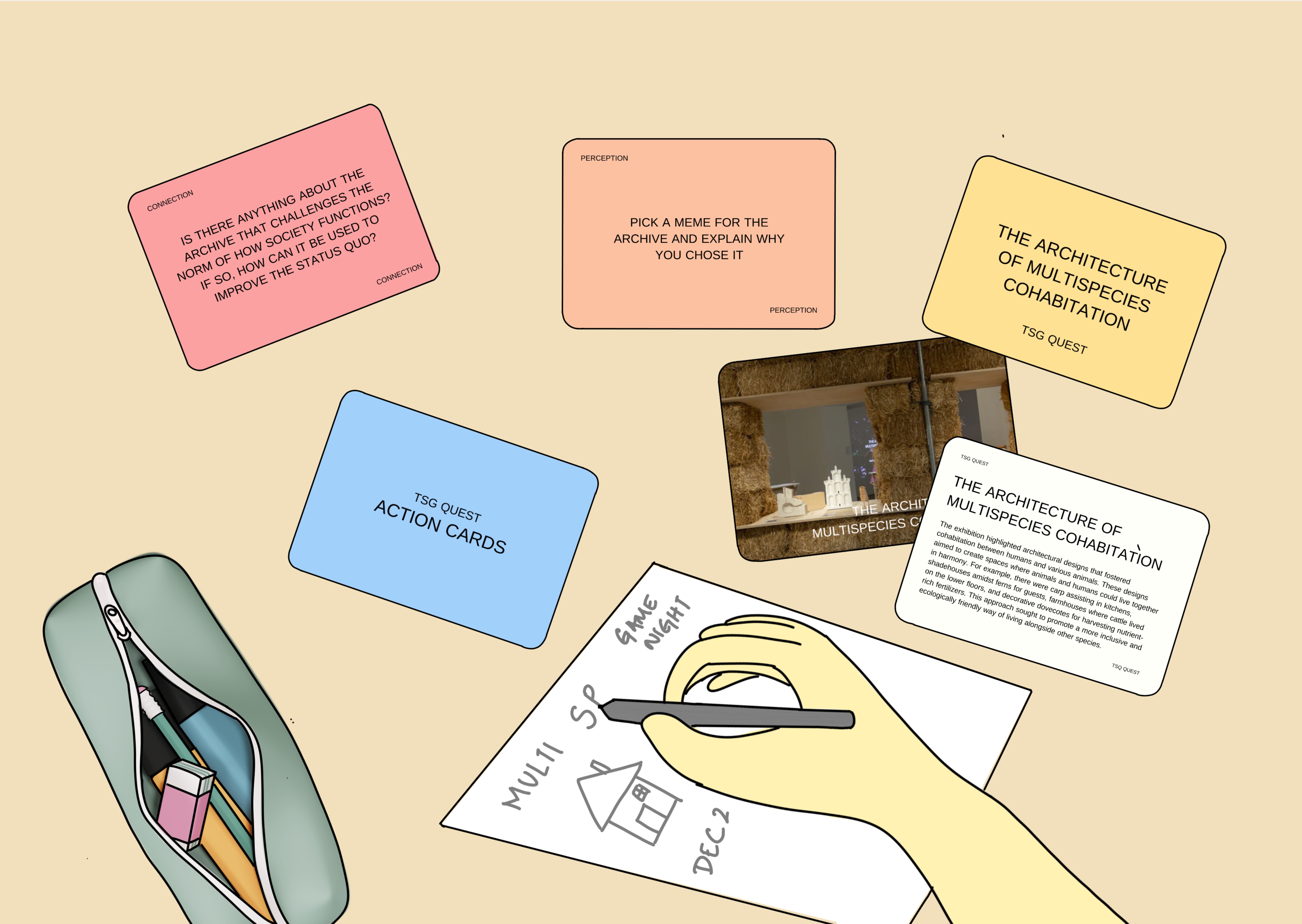
Cards run in three tiers, a structure borrowed from We're Not Really Strangers: Perception (5 minutes, creative interpretation), Connection (15 minutes, drawing parallels to personal housing experience), Reflection (20 minutes, critical response fed back into the archive wall).
The inversion is the design. The first version asked players what the archive said. The second asks what it means to them. Collecting cards still drives the game, but the archive has become the prompt for a conversation rather than the subject of a test.
We playtested the card version and it held up where the first had not, people talked to each other, and they talked about housing.
All five cards flip. Click, or Tab to a card and press Enter or Space, both faces are reachable from the keyboard.
Each turn, a player reads an Action Card and an Archive Collector Card, selects the best response, and earns that Archive Collector Card. Multiple copies are available, and the player with the most cards wins.
All five cards flip. Click, or Tab to a card and press Enter or Space, both faces are reachable from the keyboard.
The archival information card provides context of the specific archive in discussion.
Reflection cards encourage critical thinking about the archives, sharing personal reactions, and integrating interactions into the online TIMESCAPE living archive [20 minutes].
The Archive card is given to the person that wins the specific round. The player with the most archive cards wins the TSG Quest.
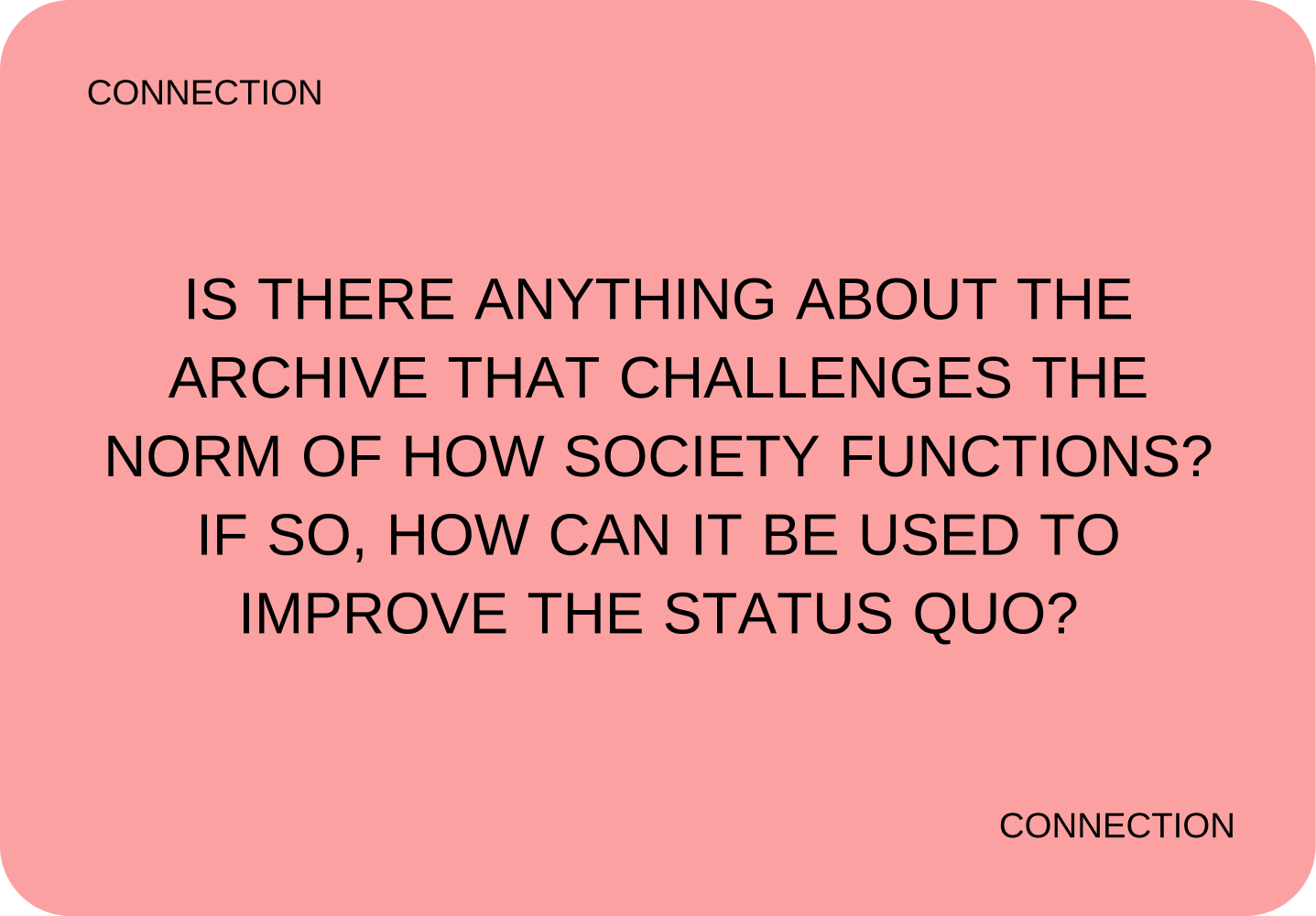
Connection cards help players draw parallels with housing issues, uncover unspoken narratives, and deepen their understanding of the archive [15 minutes].
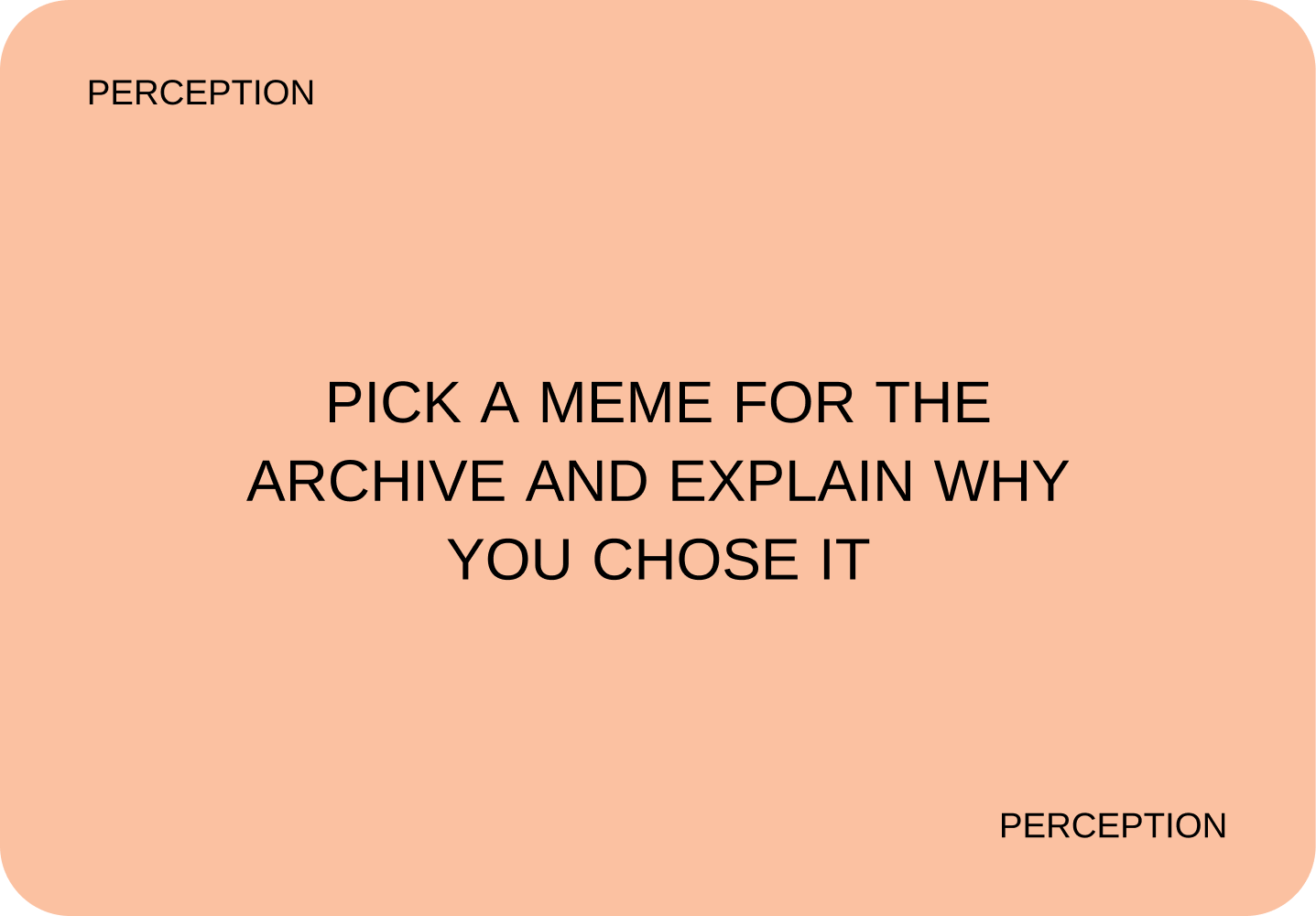
Perception cards foster creative thinking to interpret and perceive the archive [5 minutes].
The prototype
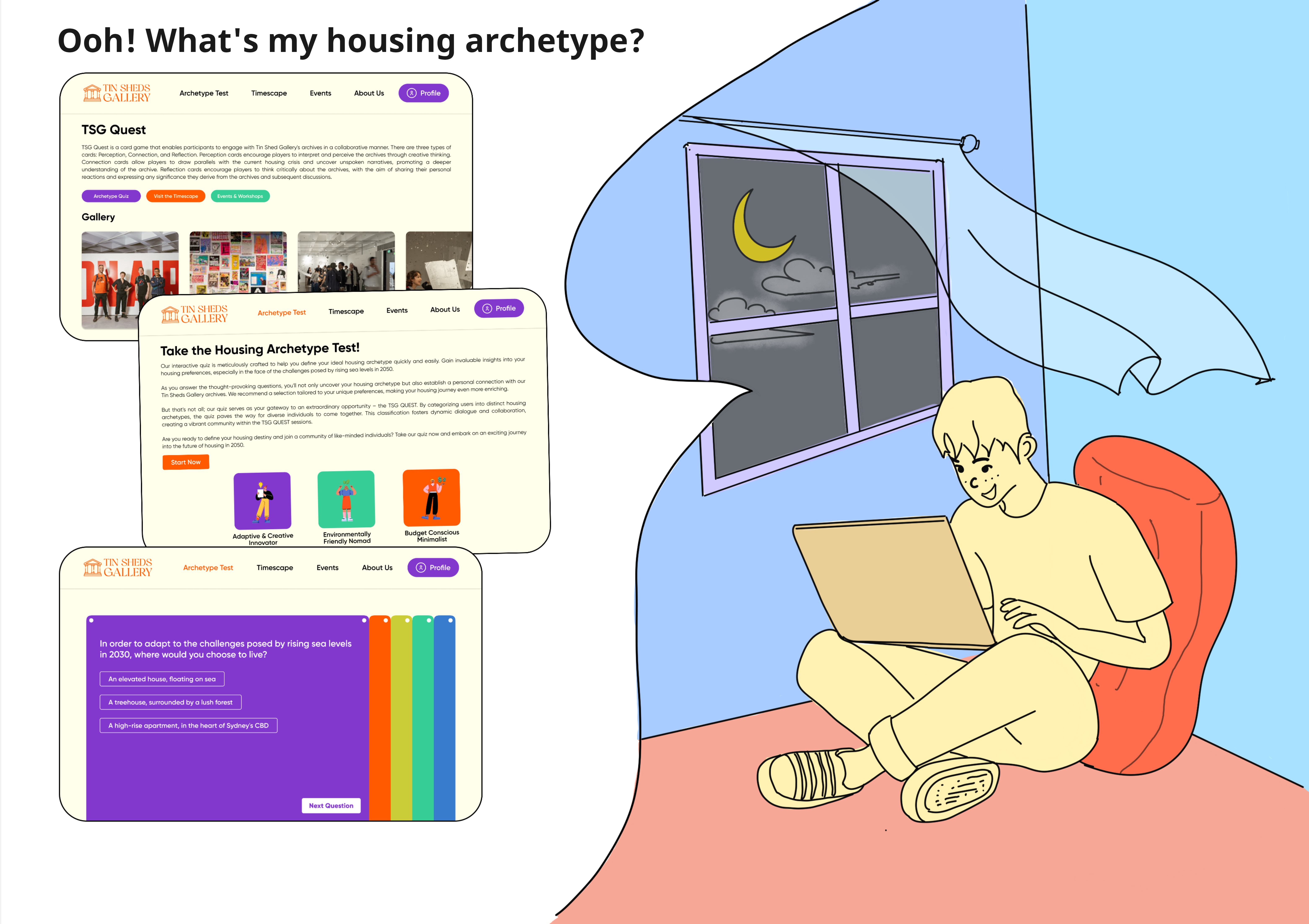
The TSG website
The housing archetype quiz on the TSG website categorizes visitors before they arrive, giving them a personal stake in the game. It also serves as the primary sign-up point for TSG QUEST sessions.
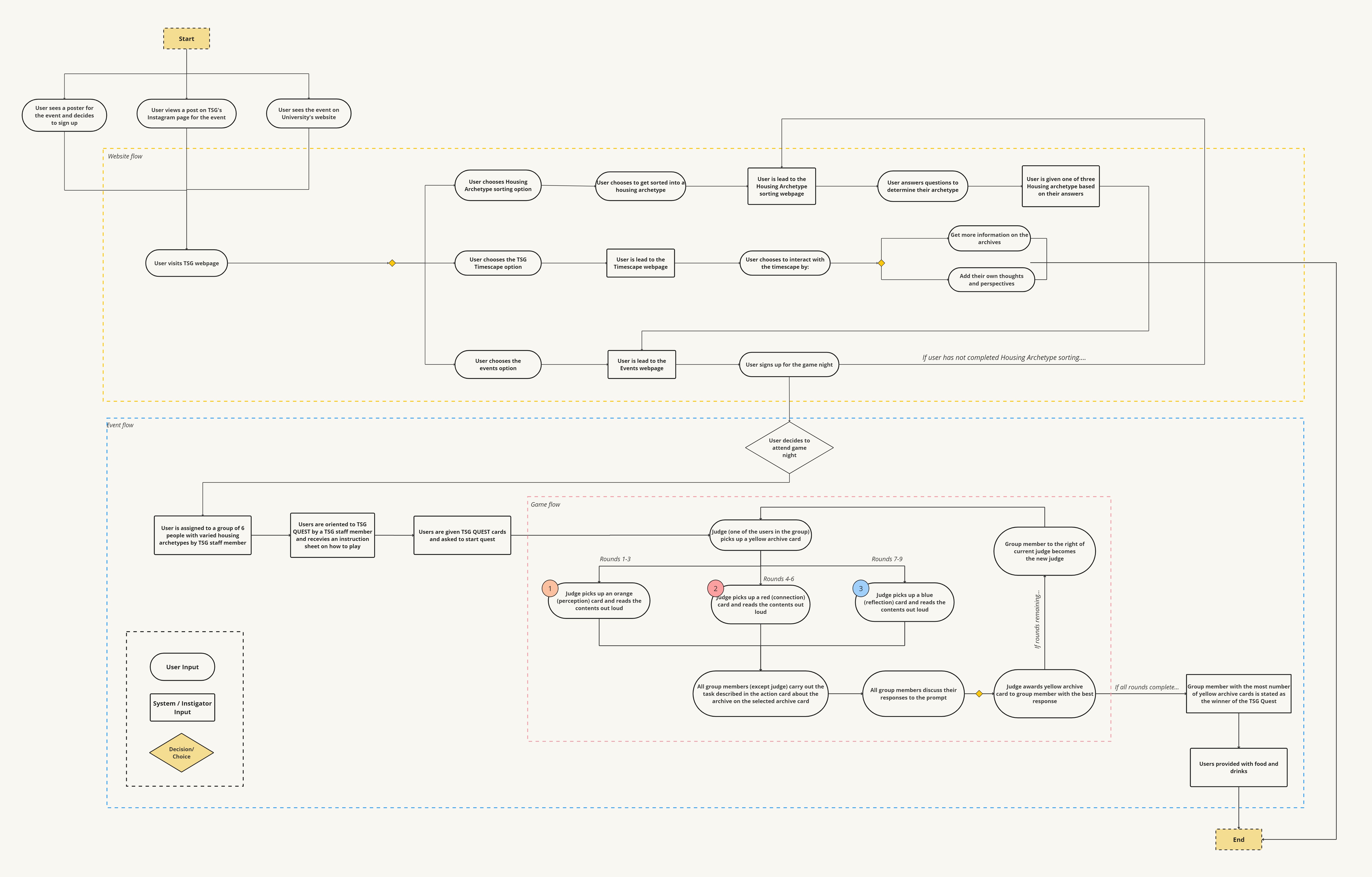
Flowchart
From discovering the game online to contributing to the TIMESCAPE, the flowchart maps the full participant journey.
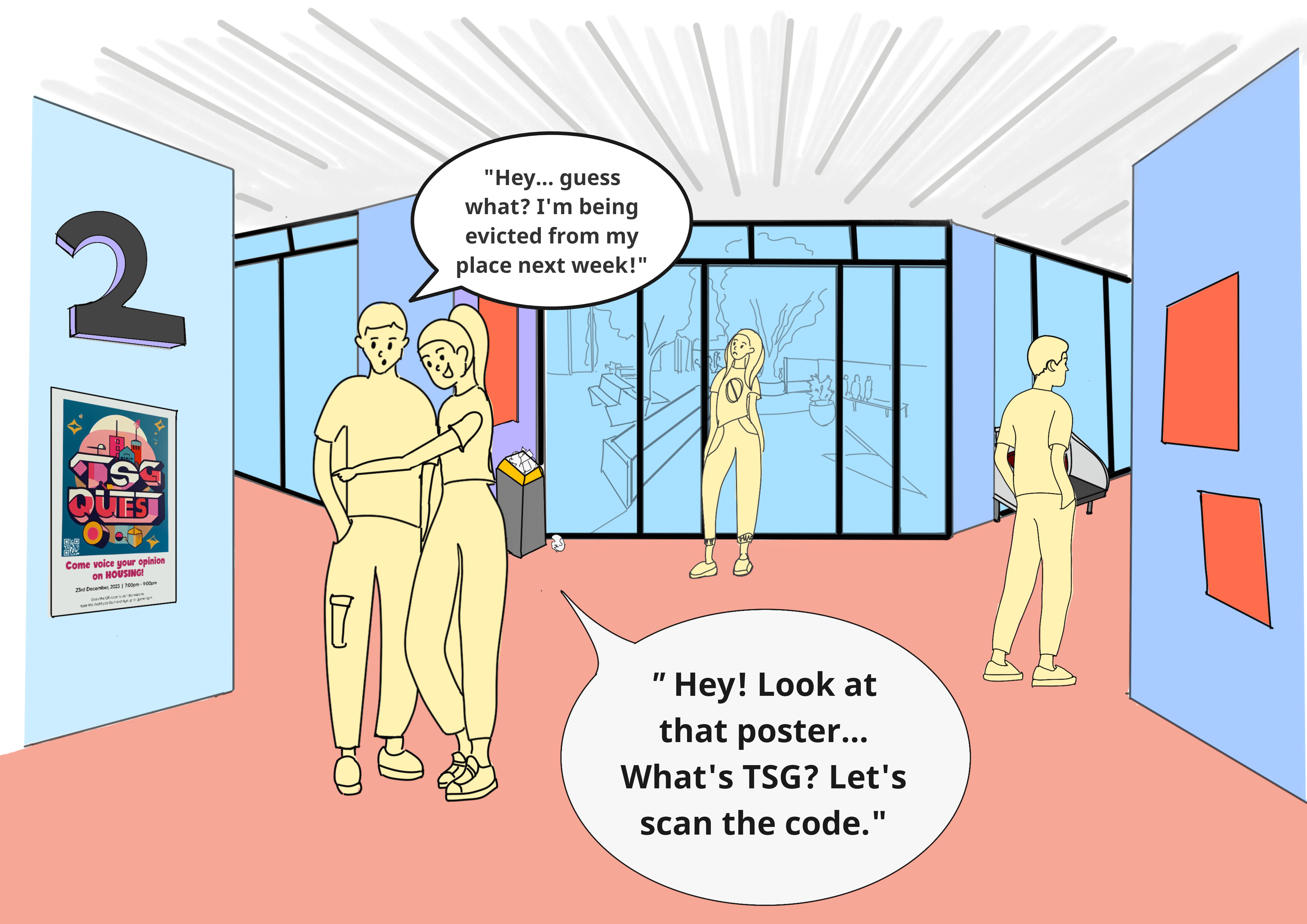
Storyboard
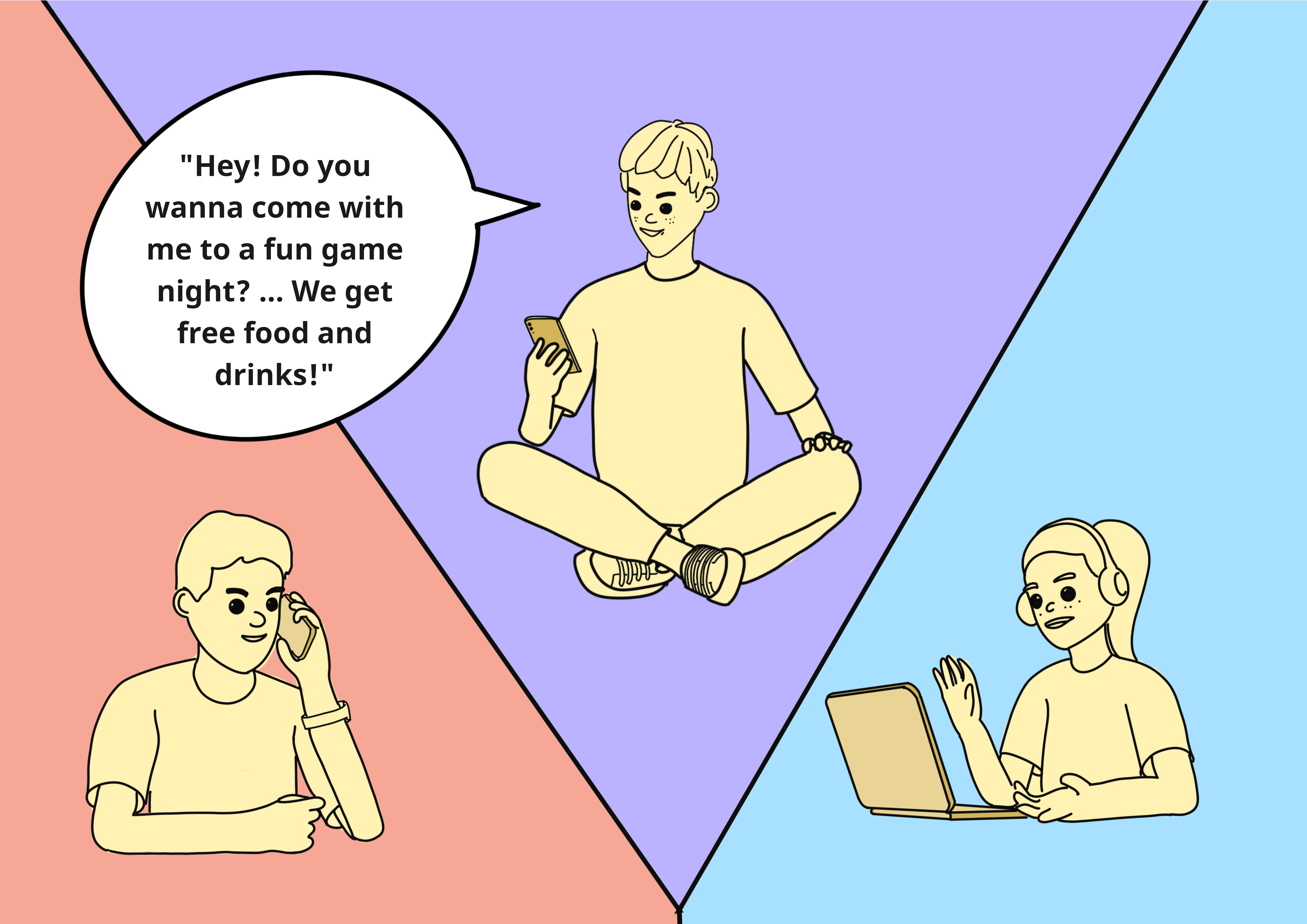
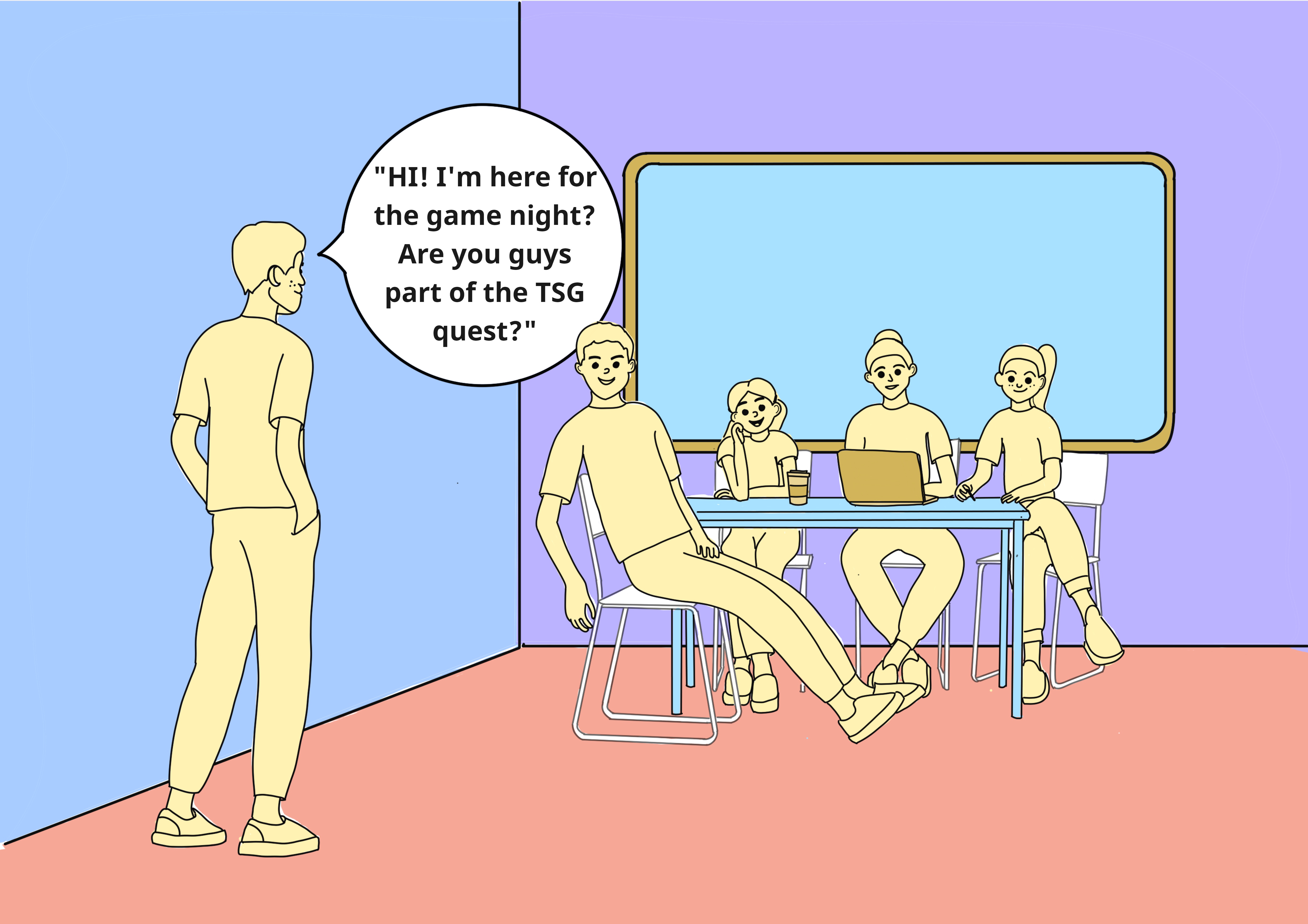
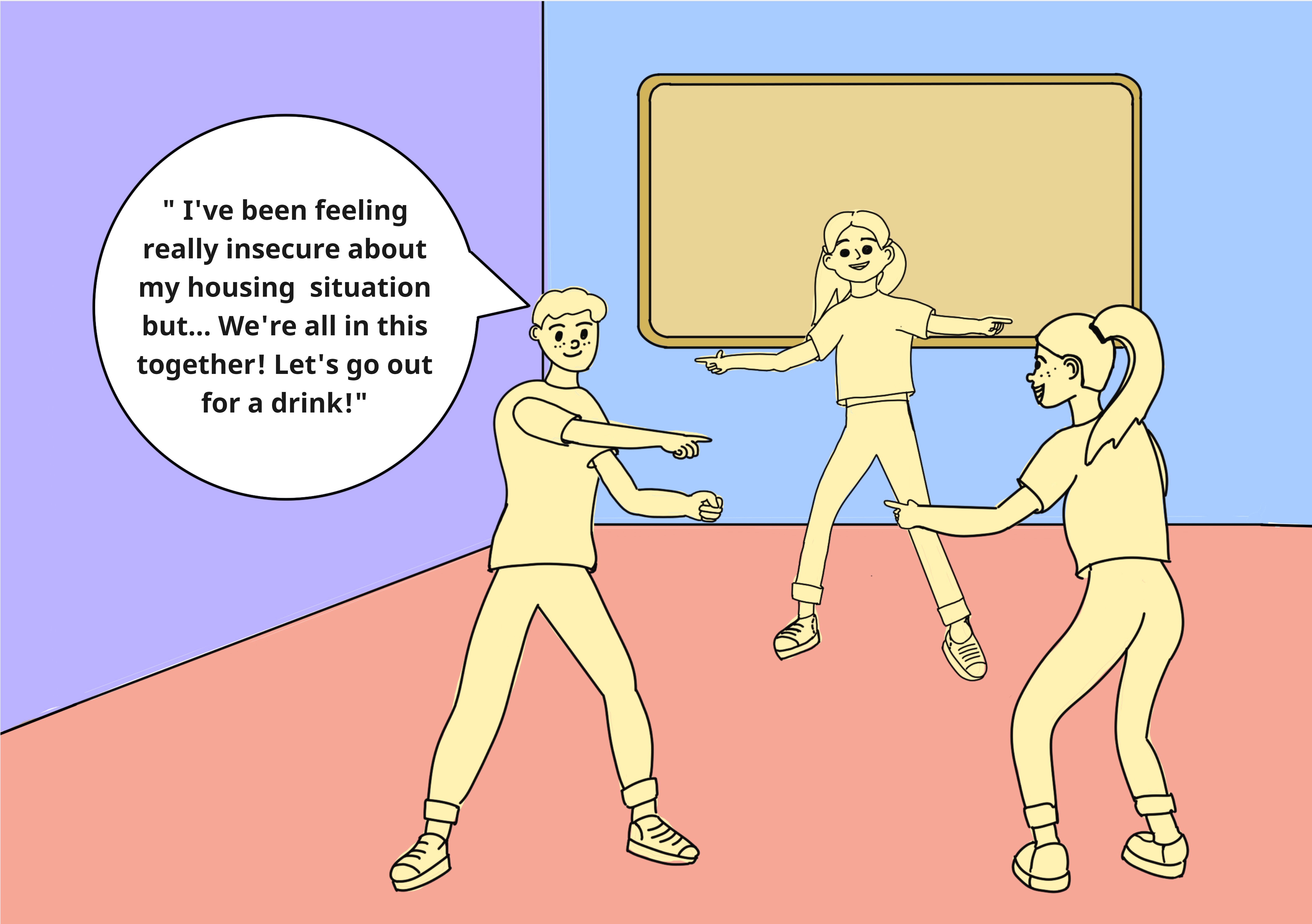
Ethan discovers the TSG Quest through a poster, takes the housing archetype quiz, signs up, and brings friends to a game night, where he realises many students share his housing anxieties. The storyboard follows his full journey from discovery to connection.
We stopped asking people what the archive said and started asking what it meant to them. Which one is participation?
Outcome
Through this project, I have discovered the rich history of Tin Sheds Gallery, which once served as a vital platform for artists to express their opinions. It is crucial for the gallery to maintain this role, despite changes in its audience. Neglecting this heritage would be a significant loss for both the gallery and the community it once supported.
The card game was not adopted by TSG. The project was an exploration of method, how to arrive at an intervention, rather than a delivery engagement.